
Skill Level Two
Ready to take the next step? In this skill level, you’re beginning to recognize what’s happening on the court and can perform fundamental skills with some guidance. Consistency and confidence are still growing, but every match helps you sharpen your strokes and play with more purpose.
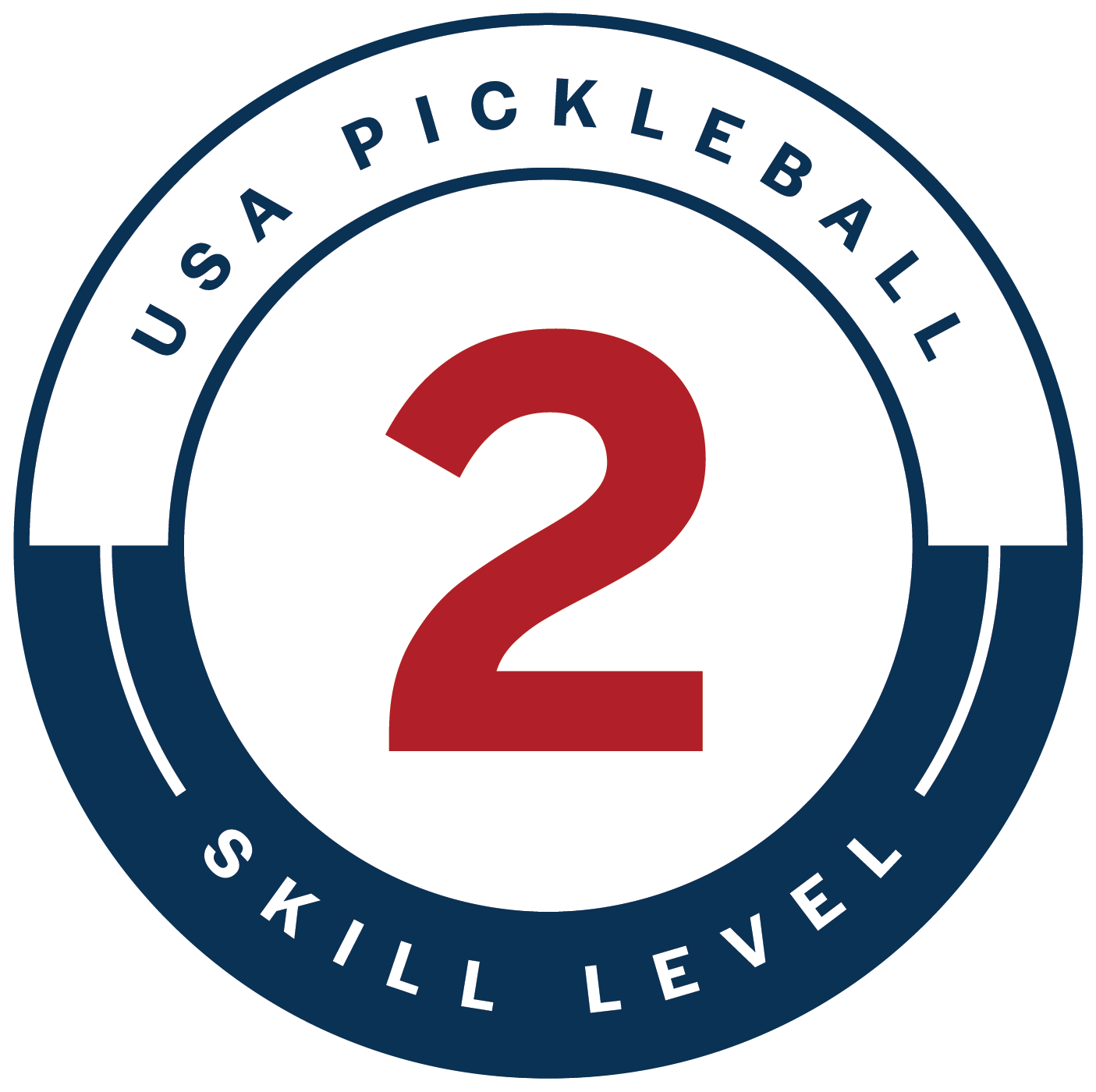
2.0 to 2.5
Skill Level Two Details
What To Expect at Level Two
- You can execute the basic strokes, but results are inconsistent, especially under pressure.
- Serves and returns are developing; some attempts lack depth or direction.
- You’re beginning to recognize simple court situations and where to stand, but timing and decision-making are still forming.
- You’re learning to sustain short rallies and getting first reps with dinks and third-shot concepts.
- Scorekeeping and basic rules and positioning are becoming familiar.
Tips to Level Up
- Say the score out loud every point to help build focus and confidence.
- Aim deep on serve/return; depth buys time to get to better positions.
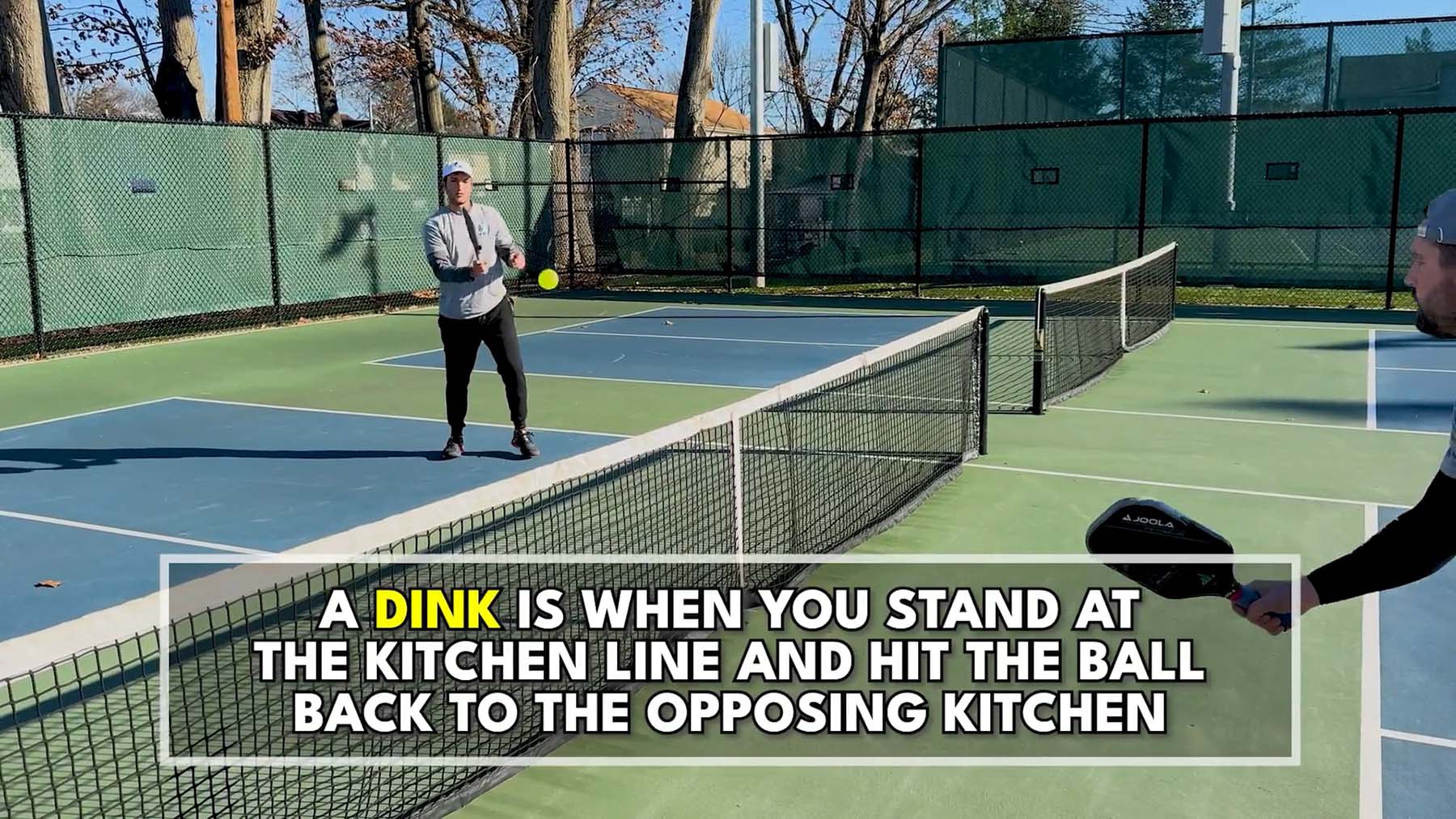
- Practice soft hands at the kitchen: gentle, controlled dinks over power.
- Track one habit per game (example: “split step before every volley”).
- Keep it fun: short sets to 7, rotate partners, celebrate longer rallies.
Skills for Level Two Players
Level Two Skills
Level 2.0 Skill Level
- Forehand / Backhand: Basic strokes are developing but inconsistent.
- Serve / Return / Dink: Some success; reliability is still building.
- 3rd Shot / Volley: Still learning the purpose and feel of these shots.
- Strategy: Learning rules and scoring, and beginning simple positioning and movement.
Level 2.5 Skill Level
- Forehand: Basic directional groundstrokes; consistency still developing.
- Backhand: Limited success; building confidence and control.
- Serve / Return: Very basic serve; inconsistent placement into the correct service box.
- Dink: Basics developing; can sustain short rallies with players of similar ability.
- 3rd Shot: Making minimal attempts at the drop shot.
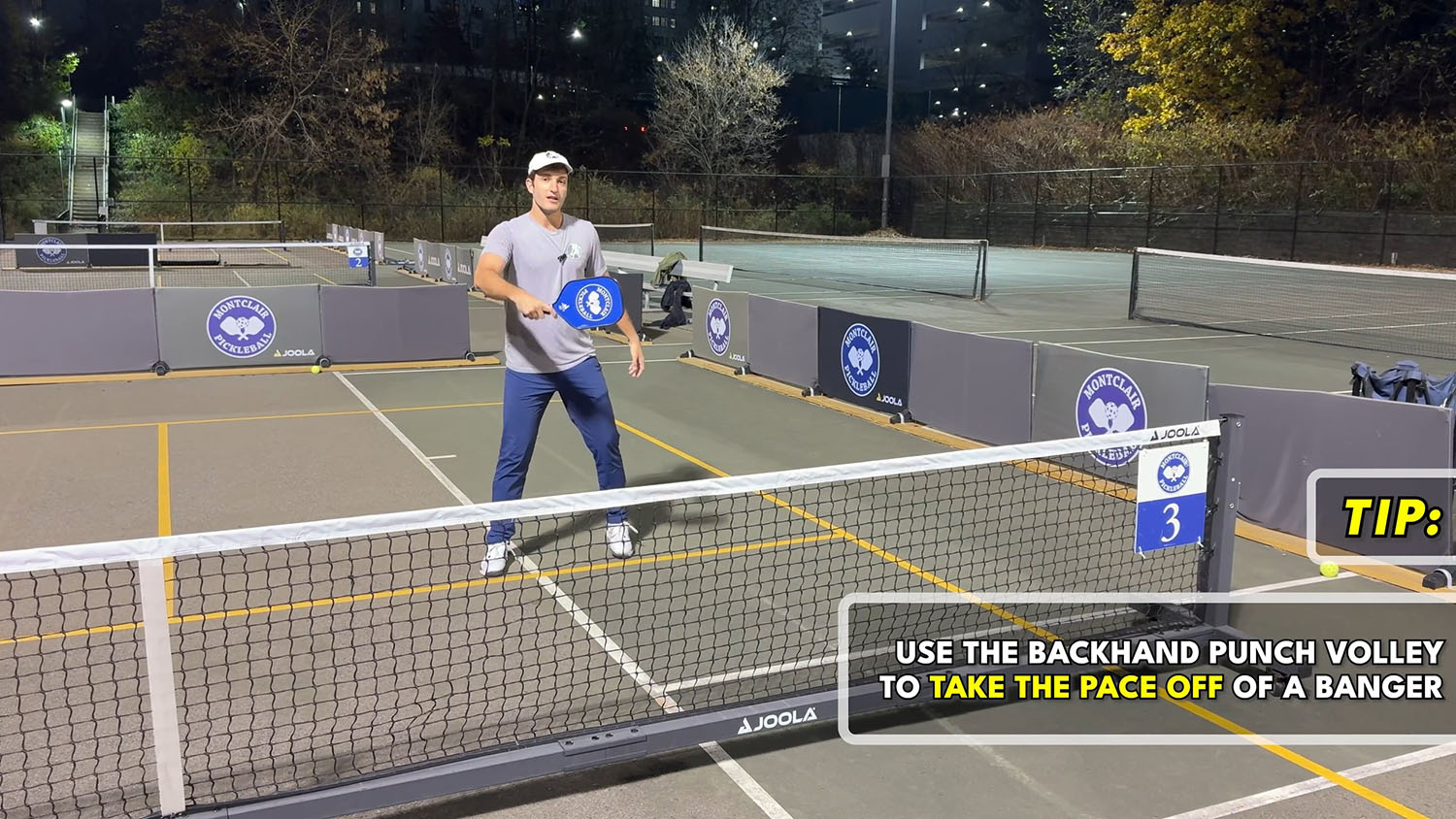
- Volley: Developing a simple punch volley.
- Strategy: Limited experience and consistency; knows basic rules and how to keep score.
Level Two
Player Tips & Strategies
Ratings and Levels
Determining Your Skill Level
Player Skill Levels
Pickleball skill levels serve as a helpful guide to understanding what it means to play at different stages of the game. These definitions aren’t official ratings, but they outline the skills, consistency, and strategy you can expect to see at each level, think of it like a handicap in golf, know where you stand and how to improve. Whether you’re just starting out or playing at an advanced level, these descriptions make it easier to track your progress and find the right competition for you.
This player has limited experience. Can sustain a short rally with players of equal ability. Basic ability to keep score.
- FOREHAND: Ability to hit a medium-paced shot. Limited directional intent and lacks consistency.
- BACKHAND: Learning basic shot. Avoids and lacks directional intent/consistency.
- SERVE / RETURN: Able to hit a medium-paced shot. Lacks depth, direction, and consistency.
- DINK: Can sustain a basic dink rally with limited control.
- 3RD SHOT: Generally hits a medium-paced ball with limited direction.
- VOLLEY: Able to hit a medium-paced shot. Lacks direction/inconsistent.
- STRATEGY: Understands fundamentals and is playing more competitively. Is learning proper court positioning. Frequent unforced errors are likely.
- FOREHAND: Improved stroke development with moderate level of shot control.
- BACKHAND: Learning stroke form and starting to develop consistency but will avoid if possible.
- SERVE / RETURN: Consistently gets serve/return in play with limited ability to control depth.
- DINK: Increased consistency, with limited ability to control height/depth. Sustains medium length rallies. Starting to understand variations of pace.
- 3RD SHOT: Developing the drop shot in a way to get to the net.
- VOLLEY: Is able to volley medium paced shots thereby developing control.
- STRATEGY: Moves quickly towards the non-volley zone (NVZ) when opportunity is there. Acknowledges difference between hard game and soft game and is starting to vary own game during recreation and tournament play. Can sustain short rallies. Learning to follow ball and minimize coverage gaps. Basic knowledge of stacking and understands situations where it can be effective. Unforced errors significantly reduce game success.
- FOREHAND: Consistently hits with depth and control. Is still perfecting shot selection and timing.
- BACKHAND: Has improved stroke mechanics and has moderate success at hitting a backhand consistently.
- SERVE / RETURN: Places a high majority of serves/returns with varying depth and speed.
- DINK: Increased consistency with moderate ability to control height/depth. Developing patience & beginning to understand which balls are attackable.
- 3RD SHOT: Selectively mixing up soft shots with power shots to create an advantage with inconsistent results.
- VOLLEY: Able to volley a variety of shots at different speeds. Is developing consistency and control. Starting to understand the block/re-set volley.
- STRATEGY: Aware of partner’s position on the court and is able to move as a team. Demonstrates ability to change direction in an offensive manner. Has a moderate number of unforced errors per game. Solid understanding of stacking and when and how it could be used in match play. Beginning to identify opponents weaknesses and attempts to formulate game plan to attack weaknesses. Learning to anticipate shots with moderate poaching intent. Beginning to understand & execute resets. Beginning to seek out more competitive play.
- FOREHAND: High level of consistency. Uses pace and depth to generate opponents' error or set up next shot.
- BACKHAND: Can effectively direct the ball with varying depth and paces with good consistency.
- SERVE / RETURN: Serves with power, accuracy, and depth and can also vary the speed and spin of the serve.
- DINK: Ability to place ball with high success at changing shot types while playing both consistently and with offensive intent. Recognizes and attempts to hit attackable dinks.
- 3RD SHOT: Consistently executes effective 3rd shot strategies that are not easily returned for advantage. Able to intentionally and consistently place the ball.
- VOLLEY: Able to block hard volleys directed at them and can consistently drop them into the NVZ. Comfortable hitting swinging volleys. Hits overhead shots consistently, often as put-aways.
- STRATEGY: Has good footwork and moves laterally, backward, and forward well. Uses weight transfer for more efficient footwork. Able to change direction with ease. Very comfortable playing at the non-volley zone. Communicates and moves well with partner — easily “stacks" court positions. Poaches effectively and starting to use ATP, ERNE, resets, and counter-attack strategies. Understands strategy and can adjust style of play and game plan according to the opponent’s strengths and weaknesses and court position. Limited number of unforced errors.
- FOREHAND | BACKHAND | SERVE / RETURN: Hits all shot types at a high level of ability from both the forehand and backhand sides including: touch, spin, and pace with control to set up offensive situations. Has developed good touch from all court positions. Has developed a very high level of variety, depth, and pace of serves.
- DINK: Mastered the dink and drop shots. Ability to move opponents with shot placements. Exhibits patience during rallies with the ability to create an opportunity to attack utilizing the dink. Increased ability to change the pace of dinks strategically.
- 3RD SHOT: Mastered the 3rd shot choices and strategies to create opportunities for winning points. Able to drop and drive ball from both the forehand and backhand side with high level of consistency.
- VOLLEY: Able to block hard volleys directed at them and consistently drop them into the NVZ. Places overheads with ease for winners. Able to volley shots toward opponents feet consistently. Comfortable with swinging volley in both initiating and ability to attack back or neutralize return.
- STRATEGY: Mastered pickleball strategies and can vary strategies and styles of play in competitive or tournament matches. Is successful at turning defensive shots into offensive shots. Has efficient footwork and effective use of weight transfer for improved quickness on the court. Has ability to execute ATP, ERNE, poach, and counter-attack as needed and use surprise & deception to an offensive advantage. Easily and quickly adjusts style of play and game plan according to the opponent’s and partner’s strengths and weaknesses and court position. Rarely makes unforced errors.
This player is a top caliber player. Performance and tournament wins speak for this player's ability to consistently perform at a high level.
Level Up
Skill Level Three
Get Rated
Need a Rating?
Don’t have a rating and want to get one? Click the button below to learn more about pickleball ratings.