The Basics of Pickleball
Pickleball is a unique sport with specific rules that shape the way the game is played and give it its distinctive character. Unlike other racket sports, such as tennis, where play opens up immediately once the ball is in bounds, pickleball includes rules that dictate when and where players are allowed to hit the ball.
Understanding these foundational rules will help you build confidence and enjoy the game from your very first rally.
The Non-Volley Zone (The Kitchen)
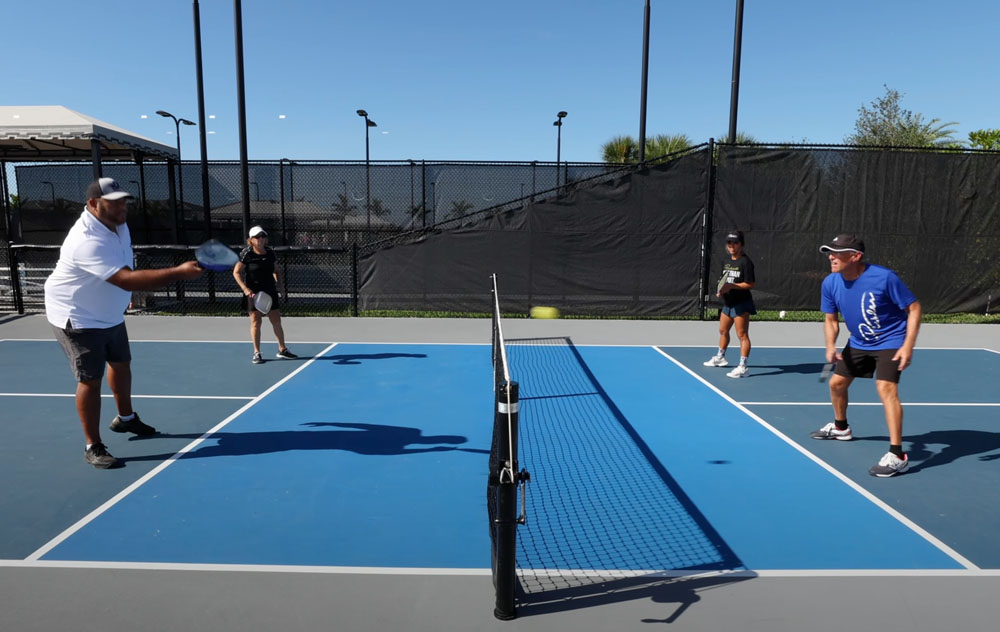
The Non-Volley Zone (NVZ), commonly known as the “Kitchen,” is the 14-foot area at the front of the court, divided evenly by the net. Each side of the court has a seven-foot NVZ.
If you are standing inside the NVZ, or touching the line that separates it from the rest of the court, you must let the ball bounce before hitting it. This rule prevents players from crowding the net and smashing every shot out of the air. If you want to volley, you must contact the ball outside of the NVZ.
This rule adds strategy and control to the game and is one of the defining elements of pickleball.
The Two-Bounce Rule
The Two-Bounce Rule requires that each team allow the ball to bounce once on their side of the court at the start of every rally before hitting it out of the air.
Both the serving and receiving teams begin behind the baseline to give the ball room to bounce. The receiving team must let the serve bounce before returning it. Then, the serving team must let the return of serve bounce before playing the ball.
After these two bounces, one on each side, the rally is open, and players may choose to volley or play the ball off the bounce.
Together, these two rules create longer rallies, balanced play, and the strategic exchanges that make pickleball so fun and engaging.
Understanding these foundational rules is the first step to building confidence on the court. The Non-Volley Zone and the Two-Bounce Rule are what give pickleball its unique rhythm, strategy, and accessibility for players of all ages and skill levels. As you continue learning the basics, you’ll discover how these rules create longer rallies, smarter positioning, and a more dynamic game overall.